
TL;DR
A multimedia messaging service, commonly known as MMS, allows users and businesses to send images, videos, audio, and rich text through mobile networks instead of plain SMS text alone. It plays a major role in personal communication and has become a powerful tool for business marketing, customer engagement, and brand promotion. This guide explains how MMS works, why it matters, and how businesses can use it effectively.
Quick Answer
A multimedia messaging service is a mobile communication standard that lets users send messages containing images, video clips, audio files, and longer text through their phone’s default messaging app. Unlike SMS, which only supports short plain text, MMS enables richer, more engaging communication. Businesses also use it for marketing campaigns, product promotion, and customer notifications because of its high open rates and strong visual impact.
Introduction
Every day, millions of people send photos, short videos, and voice clips through their phones without thinking twice about the technology behind it. That technology is called a multimedia messaging service, or MMS for short. It has quietly become one of the most widely used communication tools in the world.
MMS was originally designed to solve a simple limitation of SMS text messaging. Plain text alone could not carry photos, videos, or longer content. As mobile phones became more advanced, the demand for richer communication grew, and this messaging standard became the go-to solution.
Today, MMS is used far beyond personal chats. Businesses rely on it for marketing, e-commerce promotion, appointment reminders, and customer engagement. In this guide, we will break down what this technology is, how it works, its benefits, common challenges, and how companies can use it strategically to reach their audience.
What Is a Multimedia Messaging Service
A multimedia messaging service is a store-and-forward messaging technology that allows mobile users to send content beyond plain text. This includes photos, videos, audio recordings, animations, and slideshows.
When someone sends an MMS message, the file is compressed and routed through the mobile carrier’s network before reaching the recipient’s device. Unlike SMS, which travels over a low-bandwidth signaling channel, this type of messaging typically requires an active mobile data or Wi-Fi connection to function properly.
This distinction matters because delivery depends heavily on network conditions. If data connectivity is weak, message delivery may be delayed or fail entirely. Understanding this technical foundation helps both individual users and businesses use MMS more reliably.
How MMS Works
The process behind this technology is relatively straightforward, even though several steps work together behind the scenes.
Message creation. A user attaches an image, video, or audio file to their message using their phone’s messaging app.
Compression and encoding. The device compresses the file to meet carrier size limitations, which typically range between one and five megabytes depending on the network.
Transmission through the carrier. The message is sent through the mobile carrier’s dedicated gateway rather than the standard SMS channel.
Delivery to the recipient. Once received, the recipient’s device downloads the multimedia content and displays it within the messaging app.
This entire process usually happens within seconds, though delivery speed can vary depending on network strength, file size, and carrier infrastructure. Because MMS relies on data transmission, users with limited data plans may experience additional charges or restrictions.
Multimedia Messaging Service vs SMS
One of the most common questions people ask is how MMS compares to SMS. While both are built into virtually every mobile phone, they serve different purposes.
SMS is limited to plain text, typically capped at 160 characters per message. It works over a low-bandwidth channel and does not require a data connection, making it reliable even in areas with poor signal strength.
MMS, by contrast, supports images, videos, audio, and significantly longer text. Because it carries more data, it requires an active internet or mobile data connection. This makes it more versatile but also more dependent on network quality.
For personal use, MMS is often chosen when users want to share photos or videos instantly. For business use, it’s preferred when brands want to create a stronger visual impression than plain text can offer.
Why MMS Matters for Businesses
MMS has become an important channel for business communication and marketing. Unlike email, which often goes unopened, MMS messages are typically read within minutes of being received.
Businesses use this rich media format to send product images, promotional videos, event announcements, and personalized offers directly to customers’ phones. This visual approach tends to generate stronger engagement than plain text messages because it appeals directly to the senses.
MMS is also valuable for time-sensitive communication. Appointment reminders, delivery notifications, and limited-time promotions benefit from the immediacy and visibility that this format provides. Since most people check text messages far more often than emails, MMS can significantly improve open rates and customer response times.
Using Multimedia Messaging Service in Marketing Campaigns
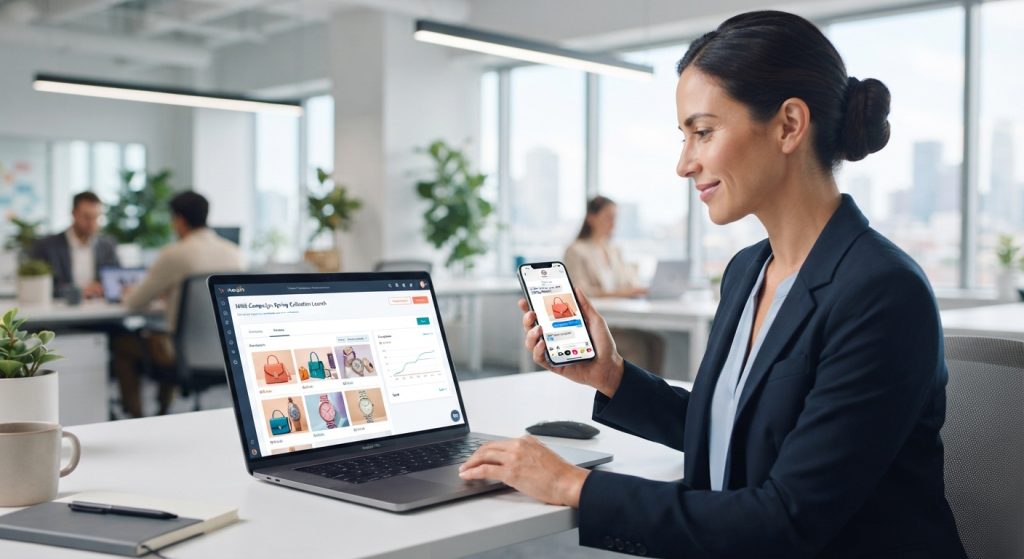
Marketing teams increasingly rely on MMS to strengthen brand visibility and customer engagement. A well-designed campaign can combine product visuals, short promotional videos, and clear calls to action within a single message.
Compared to plain SMS marketing, MMS allows brands to tell a more compelling visual story. A limited-time discount paired with an eye-catching image, for example, often performs better than the same offer sent as plain text.
Many companies integrate MMS into broader marketing platforms alongside SMS, WhatsApp, and email. This multi-channel approach ensures messages reach customers through their preferred communication method, increasing the likelihood of engagement and conversion.
When used strategically, these campaigns can support several business goals, including new product launches, seasonal promotions, membership rewards, and customer retention efforts. The combination of visual content and direct mobile delivery makes this messaging format a valuable addition to any digital marketing strategy.
Benefits of Using MMS
There are several reasons why MMS continues to grow in popularity for both personal and business communication.
Higher engagement. Messages that include images or video tend to capture attention faster than plain text.
Wide compatibility. Nearly every smartphone, regardless of brand or operating system, supports MMS by default.
Stronger brand storytelling. Businesses can showcase products, services, and promotions more effectively than through text alone.
Faster read rates. Text messages, including MMS, are typically read within minutes, making them ideal for urgent updates.
Broad reach. This format does not require recipients to download a separate app, unlike some messaging platforms.
These advantages explain why MMS remains relevant even as newer communication technologies emerge.
Common Challenges With MMS
Despite its benefits, MMS does come with a few limitations worth understanding.
File size restrictions can affect the quality of images or videos, since carriers often compress content to meet network limits. This can occasionally reduce visual clarity, particularly for high-resolution media.
Delivery can also be inconsistent in areas with weak mobile data coverage, since this format depends on an active data connection rather than the more universally available SMS signaling channel.
Additionally, costs can vary by carrier and region. While many modern mobile plans include MMS at no extra charge, some prepaid or international plans may apply additional fees.
For businesses, compliance is another consideration. Sending MMS campaigns typically requires adherence to messaging regulations, including obtaining proper consent from recipients and providing clear opt-out options.
How to Use MMS Effectively
Whether for personal communication or business marketing, a few best practices can improve the overall experience with MMS.
Keep file sizes reasonable to avoid delivery issues or excessive compression. Use clear, high-quality visuals that communicate the message quickly, since recipients often view this type of content briefly before deciding whether to engage further.
For businesses, personalization plays an important role. Tailoring content based on customer preferences or past behavior tends to improve engagement compared to generic, one-size-fits-all messages.
It is also important to time campaigns appropriately. Sending messages during reasonable hours and avoiding excessive frequency helps maintain a positive relationship with recipients rather than appearing intrusive.
Finally, tracking performance metrics such as delivery rates, open rates, and click-through rates allows businesses to continuously refine their MMS strategy over time.
MMS Compliance and Best Practices for Businesses
Businesses sending bulk MMS campaigns need to stay mindful of regional messaging regulations. Most markets require prior consent before sending promotional content, along with a clear and easy way for recipients to unsubscribe.
Working with an established MMS gateway or bulk messaging provider can simplify compliance, since reputable platforms typically build opt-in and opt-out handling directly into their systems. This reduces the risk of complaints, blocked numbers, or damage to sender reputation.
Segmenting audiences is another practical step. Instead of sending the same MMS content to an entire customer list, businesses can group recipients by location, purchase history, or engagement level. This allows for more relevant messaging, which tends to improve both response rates and long-term customer trust.
Testing content before a full rollout also helps. Sending a small batch of MMS messages to a limited audience first can reveal issues with formatting, load times, or image rendering before the campaign reaches a wider group.
The Future of Multimedia Messaging Service
As mobile technology evolves, MMS continues to adapt alongside newer standards like RCS (Rich Communication Services), which offers enhanced features such as read receipts and larger file support. However, it remains widely supported across virtually all devices and carriers, making it a dependable option for both personal and commercial communication.
Its simplicity, broad compatibility, and lack of app-download requirements mean this messaging format is unlikely to disappear anytime soon, even as messaging technology continues to advance.
Conclusion
A multimedia messaging service has evolved from a simple way to share photos into a versatile communication and marketing tool used by individuals and businesses alike. Its ability to combine visuals, video, and audio with mobile messaging gives it a unique advantage over plain text communication.
For everyday users, MMS offers a convenient way to stay connected. For businesses, it represents an opportunity to engage customers more effectively through visual storytelling and direct mobile reach. Understanding how it works, along with its benefits and limitations, allows both individuals and companies to make the most of this widely used technology.
FAQs
What is a multimedia messaging service used for? It is used to send images, videos, audio clips, and longer text messages through mobile phones. Businesses also use it for marketing campaigns and customer communication.
Is MMS the same as SMS? No. SMS only supports plain text with a character limit, while MMS supports images, video, audio, and longer messages, typically requiring a data connection.
Does MMS require internet access? Yes, it generally requires mobile data or Wi-Fi to send and receive multimedia content, unlike SMS which works over a separate signaling channel.
Why do businesses use MMS for marketing? Businesses use it because it delivers higher engagement through visual content, achieves fast read rates, and does not require customers to download a separate app.
Is a multimedia messaging service free to use? It depends on the mobile carrier and plan. Many modern plans include MMS at no extra cost, though some prepaid or international plans may charge additional fees.